
Business
Livestock Biosecurity Support
Focusing on the Prevention and Control
of Disaster-Type Animal Infectious Diseases, including Highly Pathogenic AI, ASF, LSD, and FMD

Standard Cleaning, Disinfection, and Pest Control System
Facilities connected to farms must strictly follow the 3-step Standard Operating Procedure (SOP) for biosecurity: Cleaning → Disinfection (Pest Control) → Verification, ensuring full compliance with disinfectant usage guidelines (type, dilution & contact time).
Specialized Initial Response Service
Upon receiving a report, trained personnel should be dispatched immediately to the site to manage access control, conduct emergency disinfection (pest control), remove contamination, and support culling operations, responding quickly and in a coordinated manner.
Data-Driven Risk Assessment
Risk analysis, movement tracking, and laboratory testing must be conducted in accordance with the latest standards, enabling evidence-based epidemiological investigation and biosecurity verification.
Professional Training & Public-Private Collaboration
Biosecurity and pest control training programs are provided in line with government policies. Joint drills and on-site consulting with farms and local authorities are carried out to strengthen field cooperation and expand effective collaboration models.
Operation of Nationwide Disinfection Hubs & Deployment of Unmanned Disinfection Systems

Compliance with Government Guidelines
All disinfection hubs and unmanned systems must be operated in strict accordance with official government guidelines and specifications.
Continuous Management by Trained Personnel
Disinfection facilities should be continuously managed by professionally trained staff, with regular performance validation and safety inspections.
Unmanned & Automated System Operation
Automated, unmanned disinfection systems should be established and operated 24/7 in areas with high vehicle and personnel traffic.
Integration with National Network
All disinfection hubs should be connected to a nationwide network for real-time data sharing and centralized management.
Drone-Based & Unmanned/Smart Biosecurity
(Pest Control) Technology Development & Operation
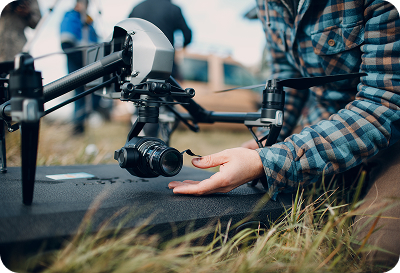
Drone-Based Disinfection & Pest Control System
Drone-based systems should be implemented in large-scale livestock farms and hard-to-access areas to ensure consistent and efficient coverage.
Unmanned & Automated System Operation
Unmanned disinfection devices and automated systems should be operated to minimize human contact, enhancing both safety and operational speed.
Smart Data Management
Drone imagery and sensor data must be analyzed, stored, and utilized for real-time monitoring and post-operation verification.
Professional Personnel Management & Training
The operation and management of drones and smart biosecurity equipment must be carried out by personnel who have successfully completed specialized training, and this requires continuous, rigorous cycles of regular drills and verification procedures.
Standard Disinfection Guidelines
& Equipment Provision
for Vehicles, Personnel, and Footwear
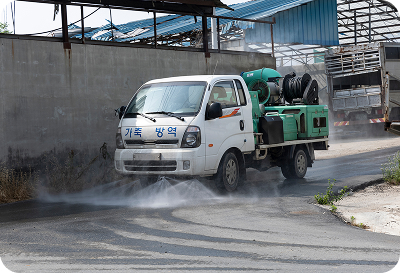
Vehicle Disinfection Standardization
All livestock-related vehicles must undergo thorough disinfection before and after site entry, in full compliance with national disinfection protocols.
Enhanced Personnel & Footwear Disinfection
All farm visitors must pass through designated disinfection zones, ensuring complete sanitation of boots and protective equipment.
Provision and Maintenance of Disinfection Equipment
Farms and facilities should be equipped with certified devices such as disinfectant mats and high-pressure sprayers, which must be inspected and replaced on a regular schedule.
Guidance and Supervision by Trained Personnel
All disinfection procedures must be conducted under qualified supervision, with management standards continuously reviewed and improved.
KAHIS-Linked Biosecurity Data System

Integrated Data Management
All national biosecurity activity data must be centrally managed in connection with KAHIS (Korea Animal Health Integrated System).
Real-Time Monitoring
Key data, including outbreak reports, movement control, and disinfection records, should be collected and analyzed in real time to enable immediate and data-driven response.
Evidence-Based Operation
Collected data must serve as the scientific foundation for risk assessment, epidemiological analysis, and policy planning.
Professional Oversight & Security
The system must be managed by certified professionals, maintaining strict data access control and compliance with national cybersecurity standards.